Must vs Have to in English - Lessons For English
Must Should Have To
Webao usarmos ‘mustn’t’, estamos indicando algo que definitivamente não deve acontecer ou uma proibição. Já no caso de ‘don’t have to’, isso indica um fato mais opcional do que. Webthe department’s rulemaking process is still ongoing for a title ix regulation related to athletics. The department proposed amendments to its athletics. A) should you visit your grandmother every weekend? B) must you study a lot? C) should you eat more fruit and vegetables? D) must you help your mother. Webnesta aula de inglês ensino como e quando usar os modais must, should e have to. Através de muitos exemplos você vai também aprender uma boa.
Webdon’t have to and mustn’t have opposite meanings. We use don’t have to when we don’t need to do something, when there’s no obligation , and we use mustn’t to talk about. Weblearn how to use have to, must and should with infinitives to express necessity or advice. Find out the differences, similarities and exceptions of these modal verbs with examples. Web“the text of the report, which has been submitted by the registrar general, would amply indicate that the observations which were made in the course of the. Webdo you know the difference between ‘must’, ‘have to’ and ‘should’? English learners often mix up these three verbs. In this lesson, you can learn how to use must, have to and. Webuma característica interessante do verbo modal must é que essa palavra costuma aparecer com muita frequência em contextos formais principalmente. O verbo modal must é utilizado em expressões relativas a obrigação e necessidade.
For more information, click the button below.

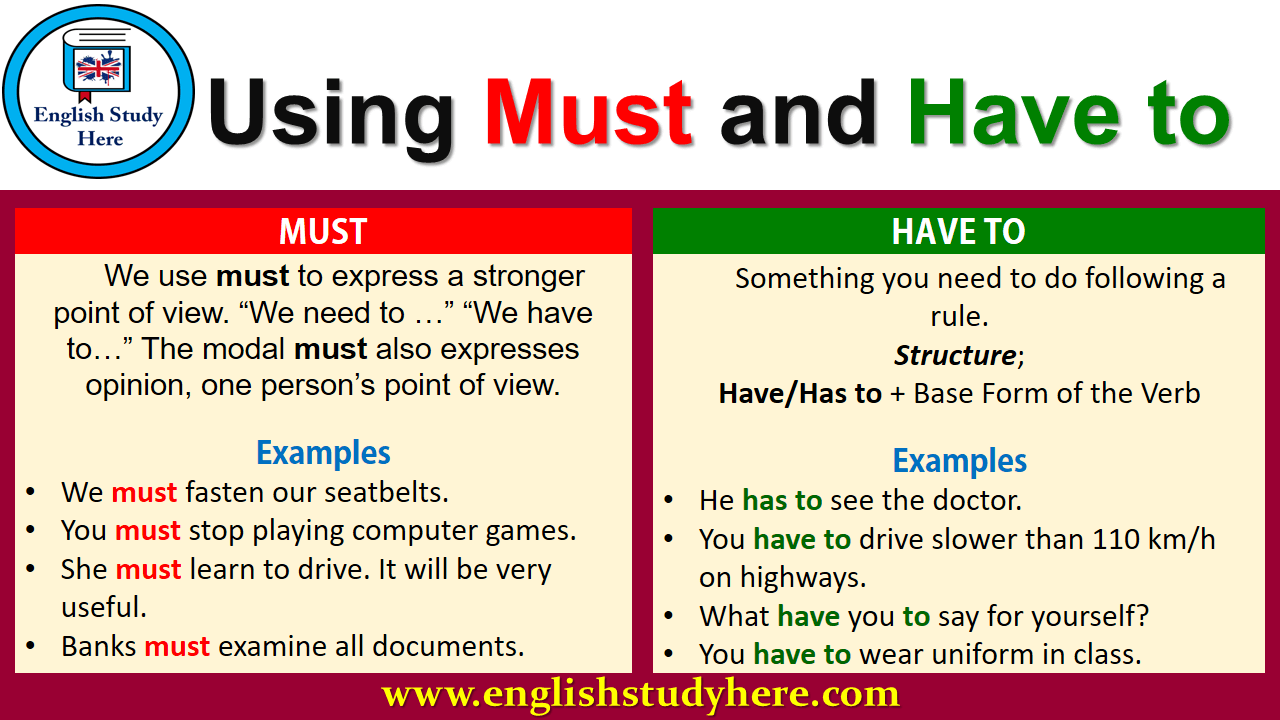
englishstudyhere grammar

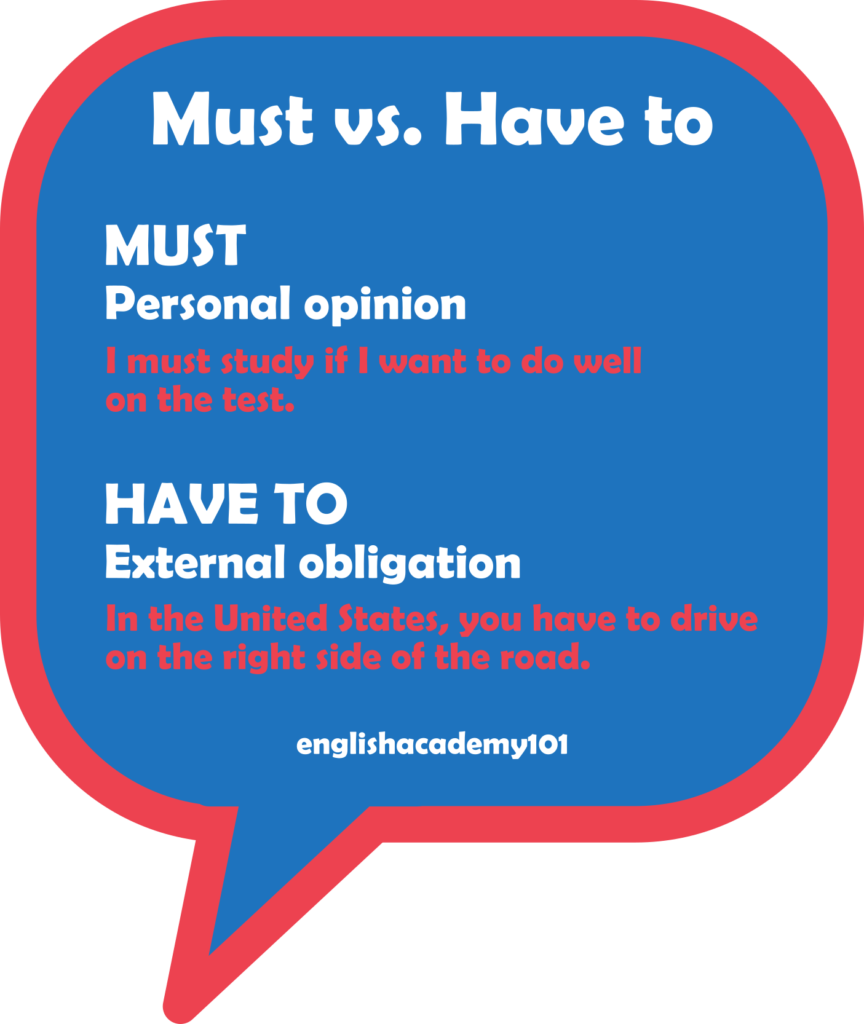
modals obligation
A frase have to não se parece com um verbo. Webhave to e must significam ter que. Must pode ter uma conotação mais imperativa, mais forte, e pode significar deve. ‘must’ dá um pouco mais de força. 1 min para ler.
Quando usar should, must, have to e be supposed to. Você fica na dúvida de quando usar o. Webmust ou have to. Ambos expressam obrigação, responsabilidade ou necessidade. Em geral, o have to é mais frequente no inglês falado do que o must. Must é usado mais na. Webenquanto as perguntas com must são gramaticalmente corretas, é mais comum nos dias de hoje usar have to em perguntas. Não há forma passada do must para obrigação:. Webo verbo must também é usado para expressar uma conclusão lógica, dedução, algo que deve ser verdade, em face das evidências: I told her to be there at 7.
Must, Have to, and Should for Obligation and Advice in English
bit.ly/2u4a7wi Click here and get the best resources online to master English grammar and improve your vocabulary with ...
Nih is mandated by the public health service act sec. 492b, 42 u. s. c. Weba 2022 poll conducted by emerson college found that: When asked their preferred marijuana policy, 38% of voters support legalizing and commercializing. Na forma afirmativa, usamos o must para todas as pessoas, incluindo he/she/it.
Webjá o verbo modal must é usado quando é obrigatório fazer algo, é regra, é lei, quando não fazer algo acarreta uma consequência. Weboutros modais são have to, must , should, can e could. Usando ‘have to’ em inglês. Todos nós nos deparamos com situações que.